 Frank
Frank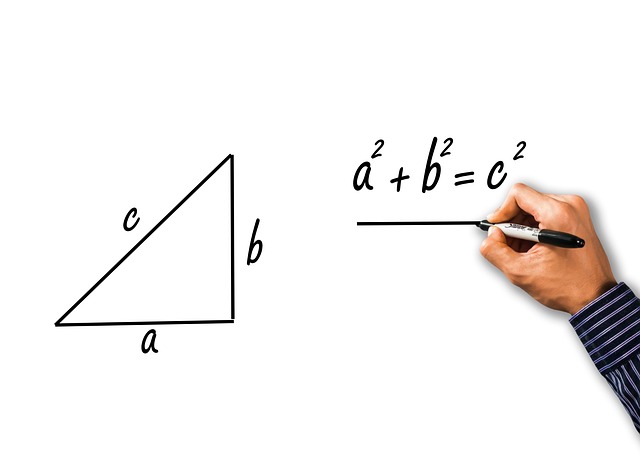
Hello, this is Frank.
This time, I got an interesting question about Pythagoras.
[Question]
There are lots of weird uncles in the world. Was Uncle Pythagoras weird too? I heard he said something like “odd numbers are men, even numbers are women.”
(From an elementary school student who dislikes politicians eating popsicles while arguing on YouTube)
[Answer]
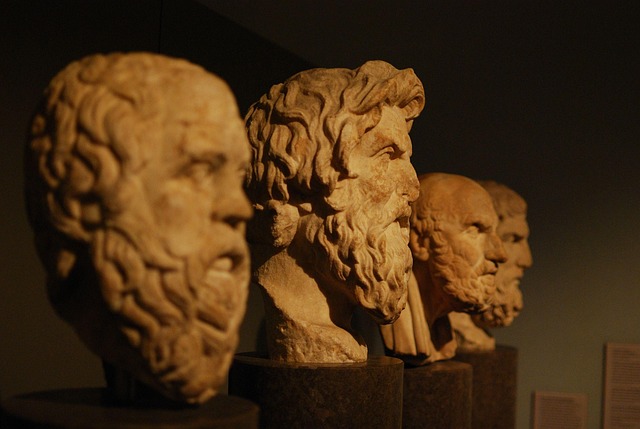
First, let’s see what kind of “uncle” Pythagoras was. He was a Greek philosopher (around 570 BCE–495 BCE), famous for his belief that “everything is made of numbers.” For him, numbers weren’t just tools for calculation, but the very key to unlocking the secrets of the universe.
He founded what was called the Pythagorean Brotherhood, a sort of intellectual society that studied the relationship between numbers and the cosmos. And yes—he really did say, as you pointed out, that “odd numbers are male and even numbers are female.” Strange as it sounds, for Pythagoras numbers had personalities and symbolic meanings, not just quantities.
Take for example, 3 (male) + 2 (female) = 5. To him, this equation symbolized “marriage,” the harmony of man and woman. It almost sounds like a love manual, doesn’t it? Imagine a modern-day matchmaker saying: “You’re a 3, she’s a 2, so together you’re 5—perfect match!” It feels like fortune-telling, but for Uncle Pythagoras, this was serious philosophy.
Of course, he is best remembered for the Pythagorean Theorem: a² + b² = c². Today every middle school student learns it, but in the ancient world this insight was revolutionary. Historians debate whether Pythagoras himself proved it, but what’s certain is that his school discovered a profound sense of harmony within triangles—and even applied it to music.
Uncle Pythagoras discovered that the length ratio of strings produces beautiful sounds. For instance, 2:1 gives an octave, 3:2 a perfect fifth. Behind music, he saw the harmony of numbers. From there, he claimed the entire universe was made of numbers and worked like a grand symphony. A bold vision indeed.
But yes, he was also eccentric. In his brotherhood, eating beans was strictly forbidden. Why? Some say he believed beans contained souls, others that they caused too much gas for serious meditation, or maybe he just hated beans. Whatever the reason, the mix of strict rules and quirky taboos shows us he was both serious and oddly human.
To see numbers as men and women, and even as a metaphor for marriage, reveals a mind closer to a poet or mystic than just a mathematician. While we use numbers today for shopping or grades, for Pythagoras they symbolized the structure of the cosmos itself.
His idea that “everything is number” deeply influenced later thinkers—Plato, Kepler, and even modern physics inherited that mindset.
So next time math class feels boring, remember: behind each formula is a hidden “harmony of numbers” that Pythagoras once dreamed of. Even a simple “3 + 2” could be, in his eyes, the story of marriage and cosmic balance.
And maybe, just maybe, marriage itself is a system where men always think they’re “3,” taking the upper hand.
[Reference Book]
 |
眠れないほどおもしろい哲学の本: もう一歩「前向き」に生きるヒント (王様文庫) 新品価格 |
 Check out my published books here.
Thank you for reading today.
Back to Genre:>Here
Need a break? Why not check out my daughter’s YouTube channel,
O-Hana Fantasia. We’d be so happy if you subscribed!
Currently, I’m participating in the popular blog rankings.
Today’s ranking for [AMISTAD] is?